The Three Village Community Trust is proud to participate with LI 250.
We welcome you to visit two of out properties that have close ties to the American Revolution.
- Date: Saturday, June 28th
- Time: 10am through 2pm.
- Guides will be at each site. We will be serving light refreshments!
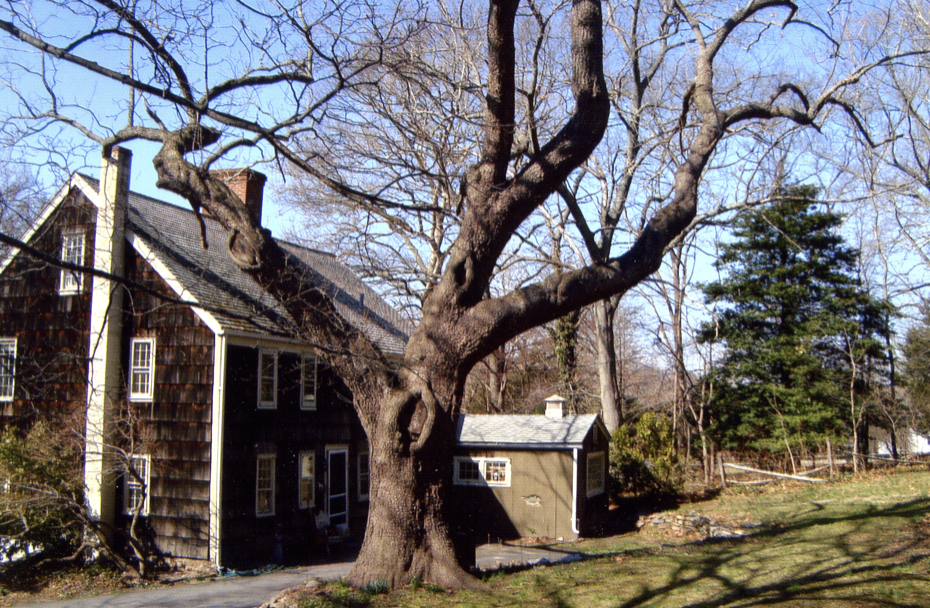
Smith/de Zafra House – Brookhaven’s first Town Hall
55 Main Street, Setauket, NY With its carefully preserved colonial architecture, unique history, and fabled owners, the Timothy Smith/deZafra House has few rivals as one of the most unique homes in the area.
Thought to be built sometime between 1695-1710, this was one of a series of farmhouses built by early settlers along the creek running to the Setauket Mill Pond. The house was originally of a salt box design with a long sloping rear roof. Post and beams were used in the framing, and two-foot wide floor boards can be found throughout the interior. In the mid-1800’s the ‘catslide’ rear roof was raised to provide more living space on the second floor. A massive chimney serves five fireplaces, and the kitchen has a rare bee hive fireplace with an arched brick opening. To the rear of the property there is a granary and a small cemetery.
The house was built by the descendants of Arthur and Martha Smith, who moved here from Southold in 1659. From 1738 to 1788, Smith family members served colonial Brookhaven as town clerks and the house became the seat of Town government. It was during this time that colonists called the Smith home “The House on the Hill.” During the Revolutionary War, British troops suspected Timothy Smith of anti-Loyalist activities, and often raided this house. Cleverly, Timothy Smith placed a broken musket above the main fireplace as a decoy, while a cache of weapons was hidden under nearby flagstones.
Remarkably, the Smith’s family ownership of the house extended for two and a half centuries, until 1948. In the 1960’s, noted Broadway dancer and choreographer Forest Bonshire acquired the property and the house became a frequent retreat for the Hollywood glitterati. In 2014, Dr. Robert deZafra bought the property for the expressed purpose of historical preservation. A renowned scientist, philanthropist and civic activist, Robert deZafra was also a founding member of the Three Village Community Trust. He singlehandedly started the laborious restoration of the house until his death in 2017. His wife, Dr. Julia deZafra, made the property available to the Three Village Community Trust for a nominal price and financed the continuation of the restoration process.
Today, The House on the Hill is an important landmark honoring the long and fascinating history, architecture and people of the Three Village community.
Patriots Rock Historic Site and Park
97 Main Street, Setauket
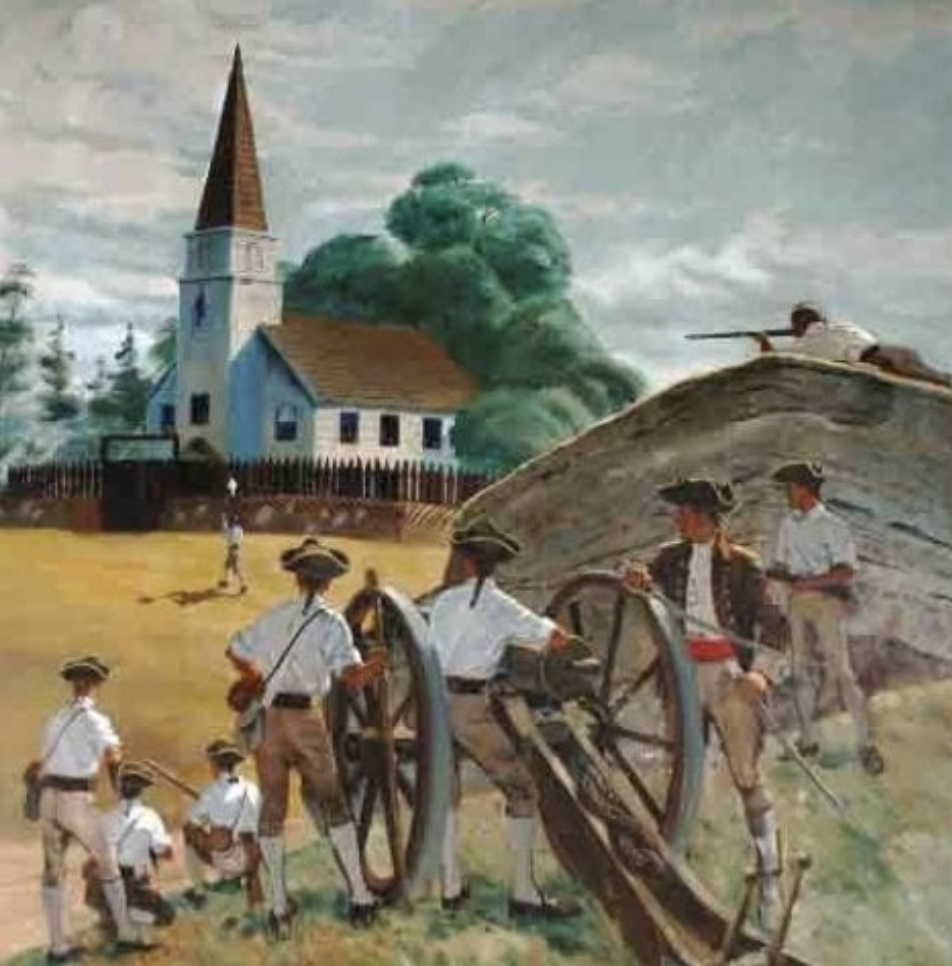
The Battle of Setauket was fought here between Colonial and British forces in 1777. Today, this historic landmark serves as an important reminder of the strength and endurance that is the foundation of our country’s past, present and future.
In geological terms, Patriots Rock is really an erratic – a large rock that is not normally found in the surrounding area. This rock was likely pushed here due to glacial movement during the last Ice Age. Similar erratics can be found throughout the Three Villages and the north shore of Long Island, though few are as large as Patriots Rock.
During the prehistoric period, and afterwards, the Algonquian Native Americans on Long Island, including the local Setalcotts, used these large boulders as location markers and meeting sites.
In the first decades of English settlement, this rock was part of the Setauket Village Green. At that time the Village Green extended all the way to the mill pond and creek. According to folklore, Reverend Nathaniel Brewster, the Town of Brookhaven’s first minister, delivered his first sermon from the top of the boulder.
At the start of the Revolutionary War, Long Island was controlled by British forces. The island’s agricultural resources, along with its proximity to British headquarters in New York City, made it an important ‘prize’. A string of fortifications was established by the British along the north shore to maintain control of the colonists and repel attacks from Patriot forces positioned across the Long Island Sound. The Presbyterian Church, visible in the distance, was commandeered by Loyalists to serve as one of these forts. With a garrison of about fifty Loyalist soldiers, led by Lt. Colonel Richard Hewlett, the area was firmly in the hands of the enemy. In the early morning hours of August 22, 1777, Patriot forces, led by General Samuel Holden Parsons, crossed from Fairfield, Connecticut to nearby Cranes Neck to launch a bold attack on the Loyalist fortification in Setauket. Fighting alongside the raiding party were Setauket residents Caleb Brewster, Zachariah Greene and Jonathan Dickerson. The Patriot forces established their position at the Rock to mount an attack on the fort. For the next four hours the air was filled with the thunder and smoke of both musket and cannon fire in fierce fighting. Finally, with neither side bowed and knowing British reinforcements would soon arrive, General Parsons ordered his forces to stop firing and to return to their whaleboats. As the raiding party sailed back to Connecticut, each American Patriot knew, that although they did not dislodge the British on this day, they let local residents know they were not abandoned. Importantly, the Patriots demonstrated the fighting strength that would someday bring both freedom and democracy to a new nation.